
Makita 18V LXT Brushless 24mm Rotary Hammer SDS-Plus
A cordless power tool (18V, brushless), a capable pick for drilling and driving around the home and site.
An SDS rotary hammer is the tool for serious drilling into concrete, brick and stone, far beyond what a combi drill manages. This guide covers what to look for in a cordless SDS and which models we rate.
A cordless SDS rotary hammer is for frequent or heavy masonry work - large holes in concrete, channelling and demolition with the right bits. Look for a strong, brushless motor, a quick-change SDS-Plus chuck, and a battery platform that can sustain the power draw. If you only drill the odd wall plug, a combi drill is enough and far cheaper.
An SDS rotary hammer uses a piston-driven hammer action that hits far harder than a combi's percussion, so it powers through concrete and stone with much less effort. It also uses the SDS-Plus bit system, which slots in quickly and transfers the hammer energy efficiently. The result is faster, cleaner masonry drilling and the ability to take on demolition tasks.
Be honest about your work. Most DIYers do not need an SDS - a combi drill handles wall plugs and light brick fine. An SDS earns its place if you regularly drill large holes in concrete, fit lots of fixings into hard masonry, or do channelling and demolition. If that is you, it transforms the job; if not, it is an expensive, heavy tool that mostly sits unused.
Cordless SDS suits tradespeople and serious renovators who drill concrete and masonry regularly. It is also worth it for big one-off projects involving lots of hard drilling. For everyday home DIY, a combi drill is the right, lighter, cheaper choice, with an SDS added only if and when the work demands it.
A cordless power tool (18V, brushless), a capable pick for drilling and driving around the home and site.

A cordless power tool (18V, brushless), a capable pick for drilling and driving around the home and site.
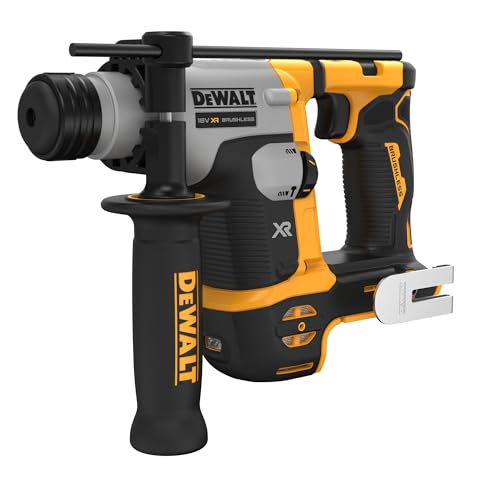
A cordless power tool (18V, 1.4 Newton Metres, brushless), a capable pick for drilling and driving around the home and site.

A cordless power tool (18V), a capable pick for drilling and driving around the home and site.

A cordless power tool (20V, 2 Newton Metres, brushless), a capable pick for drilling and driving around the home and site.

A cordless power tool (18V, 1 Newton Metres), a capable pick for drilling and driving around the home and site.
An SDS rotary hammer is for heavy masonry work - drilling large holes in concrete, brick and stone, plus light chiselling and demolition with the right bits. Its piston hammer action hits far harder than a combi drill.
Most DIYers only need a combi drill, which handles wall plugs and light masonry. Choose an SDS if you regularly drill large holes in concrete, fit many fixings into hard masonry, or do channelling and demolition.
A hammer (combi) drill uses percussion for light masonry, while an SDS rotary hammer uses a more powerful piston action and SDS-Plus bits for heavy concrete drilling. SDS is faster and far more capable on hard masonry.
Our top pick is the Makita 18V LXT Brushless 24mm Rotary Hammer SDS-Plus (our score 9.2/10) - A cordless power tool (18V, brushless), a capable pick for drilling and driving around the home and site..